This matter quickly drew attention online because it combined several modern issues faced by educators and small business owners: managing reputation in the digital age, confronting anonymous social media activity, and using legal mechanisms to protect personal and professional reputations. Although the lawsuit was filed with specific claims, it was voluntarily dismissed without judgment within weeks, meaning no court ever ruled on the truth or falsity of the allegations.
For families researching Kinder Ready, online searches often turn up speculation and conflicting information. This article aims to clarify the verified facts of the case, explain the legal processes involved, and place the matter in context so readers can understand what happened — and what didn’t — in simple, trustworthy terms.
Table of Contents
ToggleWho Is Elizabeth Fraley and What Is Kinder Ready
Elizabeth Fraley is an educator and executive with a background in early childhood education. She holds a master’s degree in education and has spent more than a decade working with young children, families, and schools. As the founder and CEO of Kinder Ready, Fraley developed educational programming focused on preparing children for kindergarten and early school success through individualized tutoring, readiness assessment, and support in areas ranging from social-emotional development to foundational academics.
Kinder Ready, Inc. is a private educational services company based in Santa Monica, California. Its mission focuses on kindergarten readiness, early academic tutoring, and developmental enrichment programs tailored to children’s individual needs. The company operates in several affluent Los Angeles neighborhoods and has actively expanded into areas such as reading intervention, social-emotional learning workshops, and executive function skill building.
As a local education provider, Kinder Ready depends heavily on trust and community relationships. Any legal matter involving the organization naturally attracts interest from parents investigating educational options, which is why understanding the court case tied to Fraley and her business is important for those seeking reliable background information.
The Defamation Lawsuit: What Was Alleged
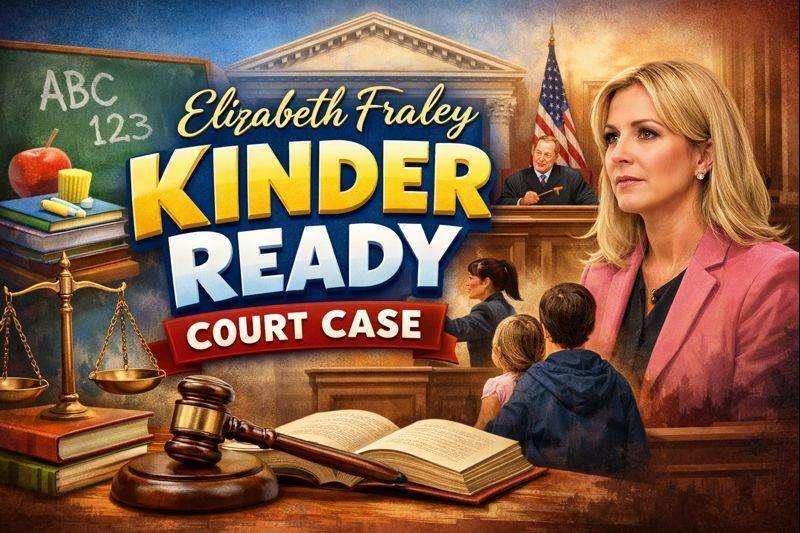
On October 9, 2023, Elizabeth Fraley, John James Chalpoutis, and Kinder Ready, Inc. filed a civil complaint in the Los Angeles County Superior Court, Santa Monica Courthouse under case number 23SMCV04480. The lawsuit alleged that the defendants created and operated a fake Instagram account in the name of “Olivia Wilson Haydon” to disseminate false, defamatory messages about the plaintiffs.
According to the complaint, the messages were sent via Instagram direct messages to at least ten known recipients, and the plaintiffs claimed these alleged communications threatened their personal and business reputations. Under California defamation law, a plaintiff must show that false statements of fact were made and published to third parties, that those statements caused reputational harm, and that the defendant acted negligently in making them.
The lawsuit was categorized as “Personal Injury – Other Personal Injury,” a standard classification for defamation claims, and was assigned to Judge H. Jay Ford III in Department O. The complaint also named several “Doe” defendants — unidentified individuals who may have been involved in creating or spreading the allegedly defamatory content.
Importantly, despite the filing of these allegations, the lawsuit did not proceed to trial, discovery, or any contested hearing before being dismissed less than two months later.
Timeline of Events in the Court Case
The timeline of the Elizabeth Fraley Kinder Ready court case was unusually short for civil litigation. On October 9, 2023, the defamation lawsuit was filed in the Santa Monica Courthouse. Shortly thereafter, a notice of case management conference was issued, scheduling initial court proceedings for April 5, 2024.
The defendants were served with the lawsuit by early November 2023 through a method called substituted service, a standard legal procedure for notifying individuals of pending litigation. Less than one month after service, on November 27, 2023, the plaintiffs filed a Request for Dismissal Without Prejudice, effectively ending the case before any formal litigation took place. The next day, November 28, 2023, the court vacated the scheduled case management conference and closed the case.
A voluntary dismissal without prejudice means the plaintiffs retain the right to refile the same lawsuit later, provided the statute of limitations — in California typically one year for online defamation — has not expired. Because no trial, judgment, or discovery occurred, the court never evaluated whether the alleged Instagram messages were defamatory or whether the defendants were responsible for them.
Interpreting a Dismissal Without Prejudice
Understanding what “dismissed without prejudice” means is key to interpreting this case. When a lawsuit is dismissed without prejudice, it stops without a ruling on the merits — and plaintiffs are free to bring the same claims again in the future if they choose. This contrasts with a dismissal with prejudice, which would bar refiling and effectively constitute a final end to the claims.
Dismissals without prejudice occur for many reasons. Parties sometimes reach a private settlement, resolve issues informally, remove the offending content that prompted the lawsuit, or decide the costs and uncertainties of litigation outweigh the potential benefits. Because court filings do not detail the private reason for the dismissal, the public record simply reflects that the matter was voluntarily dismissed and not adjudicated.
It’s also important to note what this doesn’t mean: a dismissal without prejudice is not an admission of fault by either side, nor is it a judicial validation of the claims. It is a procedural closure, and no court has ever ruled that Kinder Ready or Fraley engaged in any wrongdoing related to the allegations that prompted the case.
Common Misconceptions and Clarifications
Because the phrase “court case” can sometimes evoke criminal associations, it is worth clarifying that the Elizabeth Fraley Kinder Ready matter was a civil defamation dispute, not a criminal prosecution. Civil cases deal with private legal rights and remedies between individuals or businesses, and they do not imply criminal guilt or government enforcement.
Another misconception is that the existence of a lawsuit necessarily reflects educational inadequacy or regulatory violations. In this instance, the lawsuit concerned reputation and online conduct, not educational quality, child safety, or compliance with state educational licensing requirements. There are no public records indicating that Kinder Ready lost any license, was sanctioned by regulators, or faced closure due to this legal dispute.
Parents concerned about the impact on their children’s education should focus on verified facts: the company continues to operate, offer services, and expand its programming based on its educational mission, independent of this brief legal matter.
Lessons for Small Business Owners and Educators
The Elizabeth Fraley Kinder Ready court case highlights broader challenges faced by small businesses and educational service providers in the digital age. Online reputation management is now a vital part of running an organization because misinformation — whether true, false, or ambiguous — can spread rapidly on social media. Businesses must balance vigilance with reason and rely on legal counsel when addressing defamatory content.
Defamation lawsuits, while available as a legal remedy, are complex. They require clear evidence that false statements were made, communicated, and caused harm. When social media accounts are anonymous or fake, establishing who controlled the account can require subpoenas and extensive legal discovery — expensive, time-intensive processes that do not always yield clear results.
For educators and early childhood professionals, the case also underscores the importance of transparent communication with families. Strong relationships founded on trust reduce the likelihood that negative statements — even when unverified — will take root in a community. Proactive engagement, clear policies, and open dialogue with stakeholders are crucial ingredients of long-term reputational health.
Broader Context: Social Media, Reputation, and Legal Remedies
In recent years, courts have seen an increase in defamation claims tied to social media activity, reflecting wider societal tensions around information sharing and digital identity. Social platforms like Instagram afford users ease of expression but also anonymity, which can complicate accountability. Legal frameworks designed originally for traditional media are still adapting to the nuances of digital communication.
California’s defamation laws balance free speech with protection against reputational harm. For private figures, the legal standard requires showing negligence rather than the higher standard of “actual malice,” which is reserved for public figures. This theoretically makes defamation claims more accessible for individuals and small businesses, but the practical hurdles — like linking statements to particular individuals — remain significant.
Cases like the one involving Kinder Ready illustrate why some legal disputes resolve quickly: the strategic considerations of cost, evidence, and primary goals often outweigh the potential gains of prolonged litigation. Even without public settlement details, the rapid dismissal suggests the involved parties may have addressed the dispute through private negotiation, achieved their objective through other means, or reconsidered the wisdom of a drawn-out court battle.
How Parents and Clients Can Approach the Topic
For families and parents searching for reliable information about the Elizabeth Fraley Kinder Ready court case, separating verified facts from rumor and speculation is crucial. Verified court filings show that a defamation lawsuit was filed and promptly dismissed without judgment. There was no trial, no evidence hearing, and no ruling against Kinder Ready or its founders.
Kinder Ready remains active in its mission to support young learners. The business continues offering academic support, reading intervention programs, social-emotional learning frameworks, and readiness support for children transitioning into formal schooling. Reports from 2024 and 2025 highlight these initiatives, further signaling that the organization has maintained its focus on education beyond the sphere of litigation.
Parents who remain curious or concerned should rely on official court records, direct communications from the company, and reputable reporting rather than anonymous online commentary. Accurate information empowers families to make informed decisions based on evidence — not rumor.
Read More ; Dan Katz Wife: What We Know About Big Cat’s Private Marriage and Family Life
Conclusion: Final Thoughts on the Elizabeth Fraley Kinder Ready Court Case
The Elizabeth Fraley Kinder Ready court case stands as a clear example of how online reputation, social media activity, and civil law intersect in the modern era. While the case began with serious allegations of defamatory conduct via a fake Instagram account, it ended quickly through voluntary dismissal and without any judgment on the merits.
For readers exploring this topic, the key takeaways are straightforward: this was a civil defamation matter, not a criminal prosecution; no court made findings against Kinder Ready or Elizabeth Fraley; and the organization continues its educational work without interruption.
Ultimately, the case highlights broader lessons about digital communication, legal strategy, and the importance of reputation management — lessons relevant not just to educators or business owners, but to anyone navigating an information-rich online world where facts and speculation often collide.