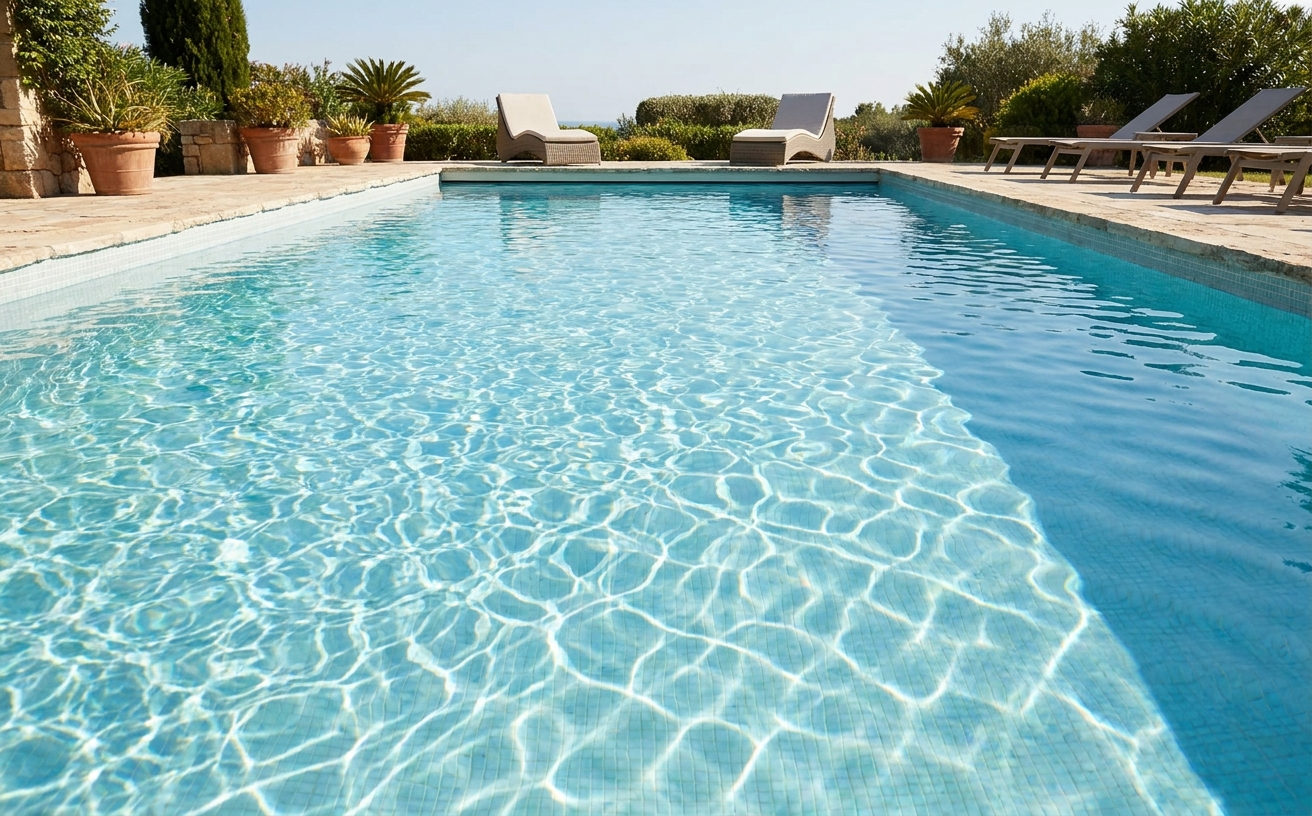
Most pool owners know that chlorine is the main tool for keeping water sanitized. What is less obvious is that how much chlorine you need depends heavily on how clean the pool is physically. Remove debris quickly, and the chlorine has less work to do. Let it sit, and the chemical demand goes up.
This relationship between physical cleanliness and chemical use is one of the most useful things to understand about pool maintenance. It explains why some pools stay clear with minimal chemical input while others need constant adjustment.
Why Physical Cleaning Lowers Chemical Demand
Chlorine works by breaking down organic material in the water. When leaves, grass, pollen, or insects end up in the pool, they start decomposing. This process releases organic compounds that consume chlorine. The more organic material in the water, the faster the chlorine level drops.
The same is true for dirt and sediment on the pool floor. Fine particles that settle and sit for days break down slowly, contributing to the organic load. Algae spores also feed on the nutrients released by decomposing material.
Removing debris before it breaks down is the most effective way to reduce chemical consumption. A leaf that is skimmed out in the morning has zero impact on chlorine levels. A leaf that sinks and sits on the floor for two days consumes chlorine the entire time it breaks down.
What the Numbers Look Like
A pool with consistent debris removal may need one or two chlorine tablets per week during moderate use. A pool where debris is allowed to accumulate can easily require twice that amount, plus additional shock treatments when the chlorine drops too low.
The difference is not only in the cost of chemicals. It is also in the water quality. Pools that rely heavily on chemical treatment tend to have more fluctuations in chlorine level, which can affect water comfort and clarity.
The Areas That Make the Biggest Difference
Not all cleaning tasks have the same impact on chemical demand. A few specific areas account for most of the savings.
The Pool Floor
Debris that sinks to the floor is the biggest contributor to organic load because it stays in contact with the water the longest. Leaves, seeds, and fine sediment on the floor break down gradually, constantly consuming sanitizer.
Vacuuming the floor once or twice a week during the swimming season removes this material before it has time to decompose significantly. During periods of heavy debris fall, more frequent cleaning makes a noticeable difference.
The Surface and Waterline
Floating debris that stays on the surface is easier to remove but also contributes to chemical consumption if left too long. A quick skim each day takes less than five minutes and removes leaves, bugs, and pollen before they sink.
The waterline also accumulates oils, lotions, and organic film. Wiping the tile or using a surface cleaner helps prevent biofilm from forming, which also consumes chlorine.
Hard-to-Reach Areas
Steps, corners, and areas behind ladders tend to collect debris that gets missed during regular cleaning. These spots can become breeding grounds for algae because the debris sits undisturbed.
A robotic pool cleaner reaches these areas more consistently than manual cleaning, running along the floor and walls to pick up debris from spots that are easy to overlook with a pole and net.
Additional Ways to Reduce Chemical Reliance
Physical cleaning is the most effective lever, but a few other factors also help keep chemical demand lower.
Run the Filter Long Enough
A filter that runs for adequate hours each day removes fine particles that would otherwise stay suspended in the water. These particles do not consume chlorine directly, but they contribute to cloudiness and can provide surfaces for algae spores to settle.
Keep the Filter Clean
A dirty filter cannot remove particles effectively. Checking the pressure gauge and cleaning the filter when needed ensures the system is doing its job.
Use a Pool Cover
A cover keeps out leaves, dirt, and sunlight. Less debris means less organic load. Less sunlight means slower chlorine breakdown. A cover used during periods when the pool is not in use can reduce chemical consumption noticeably.
What This Means for Your Routine
The practical takeaway is simple. Spending a few minutes each day on physical cleaning reduces the amount of chemicals needed to keep the water clear. Over the course of a season, this saves money, reduces the number of chemical adjustments, and results in more stable water quality.
For pool owners who travel frequently or have limited time, an automatic cleaner provides consistent floor and wall cleaning without requiring daily attention. This helps maintain the physical cleanliness that keeps chemical demand low, even during weeks when manual cleaning is not possible.
Wrapping Up
Chlorine and other chemicals are essential tools for pool maintenance. But they work best when the physical load is managed first. A clean pool needs less chemical support, and the water quality tends to be more stable as a result.