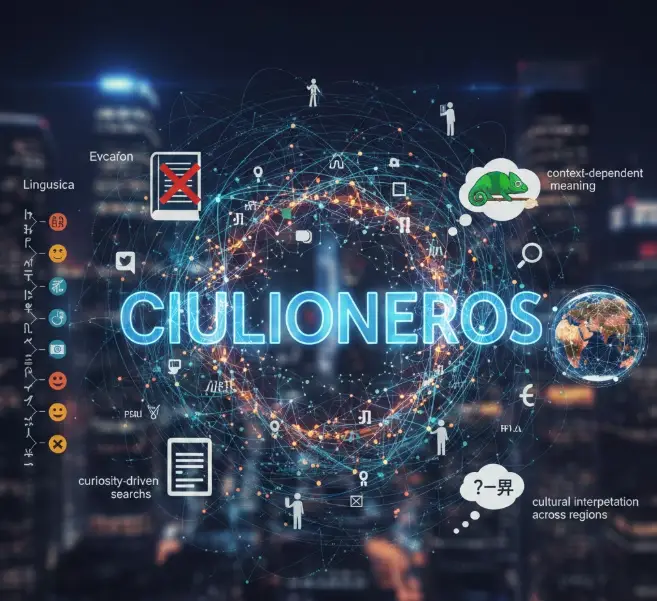
The term ciulioneros has quietly emerged as a fascinating example of how language, culture, and digital expression intersect in the modern world. It is not a word you will easily find in traditional dictionaries, yet it continues to appear in online discussions, cultural commentary, and exploratory articles. What makes ciulioneros especially intriguing is its fluid identity. Depending on context, it can suggest a shared mindset, a cultural reference, or a symbolic label adopted by communities seeking expression beyond conventional language. This article explores ciulioneros in depth, tracing its meaning, cultural relevance, digital presence, and future significance while presenting a clear, trustworthy, and human-centered understanding of the term.
Understanding the Meaning of Ciulioneros
At its core, ciulioneros is best described as an evolving term rather than a fixed definition. Linguistically, it resembles words formed in Spanish and Romance languages, particularly through the collective suffix “-eros,” which often indicates people connected by a shared activity, trait, or identity. However, the root of the word remains intentionally ambiguous, allowing its meaning to shift based on use rather than strict grammatical rules. This openness has made ciulioneros appealing to those who value creative language and symbolic communication.
In practice, ciulioneros often functions as a label rather than a literal description. People use it to refer to groups, attitudes, or cultural behaviors that feel distinct but difficult to name using standard vocabulary. Instead of narrowing meaning, the term expands it, leaving room for interpretation. This flexibility mirrors how many modern words gain popularity not through formal approval but through repeated, meaningful use in conversation.
Because of this fluidity, ciulioneros resists oversimplification. It is neither purely slang nor strictly cultural terminology. Its meaning exists where intention, tone, and context overlap, making it a powerful example of how language adapts to express complex social ideas.
Linguistic Roots and Evolution of the Term
The structure of ciulioneros hints at linguistic borrowing, particularly from Spanish-influenced word formation. Throughout history, language users have blended familiar suffixes with invented or altered roots to create new expressions. This process allows speakers to innovate while maintaining a sense of familiarity. Ciulioneros follows this pattern, sounding recognizable while remaining original.
Language evolution has accelerated in the digital age, and ciulioneros reflects this shift. Online spaces encourage experimentation, remixing, and playful distortion of words. A term can emerge, spread, and evolve within weeks, shaped by the communities that use it rather than by academic or institutional authority. Ciulioneros appears to have grown through this organic process, shaped by repetition, curiosity, and creative adoption.
Over time, the word has accumulated layers of meaning rather than replacing old ones. Each new usage adds depth, allowing the term to function as a linguistic snapshot of collective creativity. This evolutionary quality is precisely what keeps ciulioneros relevant, as it remains open to reinterpretation without losing its core sense of shared identity.
Ciulioneros in Cultural and Social Contexts
Beyond its linguistic form, ciulioneros has been associated with cultural expression and shared tradition in some interpretations. In this context, it symbolizes people who preserve, represent, or reinterpret cultural identity through storytelling, art, or social rituals. Rather than pointing to a specific tradition, the term captures the spirit of communal memory and expression.
Culture often relies on symbolic language to transmit values across generations. Ciulioneros fits naturally into this role by functioning as a collective identity marker rather than a rigid title. It can describe individuals who act as cultural carriers, whether through music, oral storytelling, or community gatherings. The emphasis lies not on uniformity but on shared purpose.
This cultural reading highlights how words can serve as vessels for meaning rather than fixed labels. Ciulioneros becomes a mirror reflecting how communities see themselves, preserving heritage while allowing adaptation. It shows that language is not merely descriptive but participatory, shaping how culture is understood and sustained.
The Rise of Ciulioneros in Digital Spaces
In online environments, ciulioneros has taken on a different yet equally meaningful role. Digital culture thrives on symbols, in-jokes, and shared references, and this term fits seamlessly into that ecosystem. It is often used to signal belonging, humor, or creative alignment within specific online communities.
The internet allows words to circulate without formal explanation. A term like ciulioneros can gain traction simply because it feels expressive or distinctive. Its ambiguity invites curiosity, encouraging people to adopt it and assign personal meaning. This process transforms the word into a social signal rather than a defined concept.
As digital communities continue to shape language, ciulioneros demonstrates how online interaction influences vocabulary. It reflects how modern communication values emotional resonance and identity signaling over strict definition, allowing language to evolve in real time alongside social interaction.
Identity, Community, and Shared Expression
One of the most significant aspects of ciulioneros is its relationship to identity. Whether used culturally or digitally, the term often points to a sense of collective belonging. People adopt it not just to describe others but to describe themselves, reinforcing shared values or experiences.
Identity-based language helps communities form and sustain themselves. Ciulioneros serves this purpose by acting as a flexible identity marker that adapts to different contexts. It allows individuals to express alignment without rigid boundaries, encouraging inclusion rather than exclusion.
This role highlights a broader truth about language: words shape how people connect. Ciulioneros exemplifies how a single term can unite diverse individuals through shared interpretation, reinforcing the idea that identity is often constructed collaboratively rather than individually.
Common Misunderstandings and Interpretations
Because ciulioneros lacks a single definition, misunderstandings are inevitable. Some may assume it carries negative connotations, while others interpret it as purely humorous or symbolic. These differing views are not contradictions but reflections of contextual use.
Misinterpretation often arises when words are removed from their social setting. Ciulioneros gains meaning through usage, tone, and intent. Without these elements, attempts to define it rigidly can miss its purpose. The term is less about what it means and more about how it is used.
Recognizing this helps prevent oversimplification. Instead of searching for a definitive explanation, it is more productive to understand ciulioneros as a living term shaped by interaction. This perspective respects the dynamic nature of language and the communities that sustain it.
Ciulioneros as a Reflection of Modern Language Trends
Ciulioneros illustrates several broader trends in modern language development. One is the move away from authoritative definitions toward community-driven meaning. Another is the blending of cultural heritage with digital creativity, producing words that exist comfortably in both spaces.
The term also reflects how language responds to the need for nuanced expression. In a complex social world, people seek words that can carry multiple meanings without restriction. Ciulioneros fulfills this need by remaining adaptable and expressive.
As language continues to evolve alongside technology and culture, terms like ciulioneros provide valuable insight into how humans communicate identity, belonging, and creativity. They remind us that language is not static but responsive to lived experience.
Read More ; Tin Swe Thant Biography: Life, Culture, Family & Lasting Legacy
Conclusion: The Ongoing Journey of Ciulioneros
Ciulioneros is more than a word; it is a reflection of how language, culture, and community interact in a changing world. Its strength lies in its openness, allowing people to project meaning rather than consume it passively. Whether viewed through a cultural, linguistic, or digital lens, the term represents shared expression and collective creativity.
As communities continue to shape language, ciulioneros will likely evolve further, gaining new interpretations while retaining its symbolic core. Its journey highlights the human desire to create meaning together, using words as bridges rather than boundaries.
In the end, ciulioneros reminds us that language belongs to its users. It grows, adapts, and survives not because it is defined, but because it is felt, shared, and lived.